Jornets: the measure of simplicity
Urban routes through history and heritage

Durada
10 min.

On comença
Oratory of Saint Joseph

Distància
100 m

Dificultat
Easy

Equipament
Comfortable footwear and clothing.

GPX
Jornets: the measure of simplicity
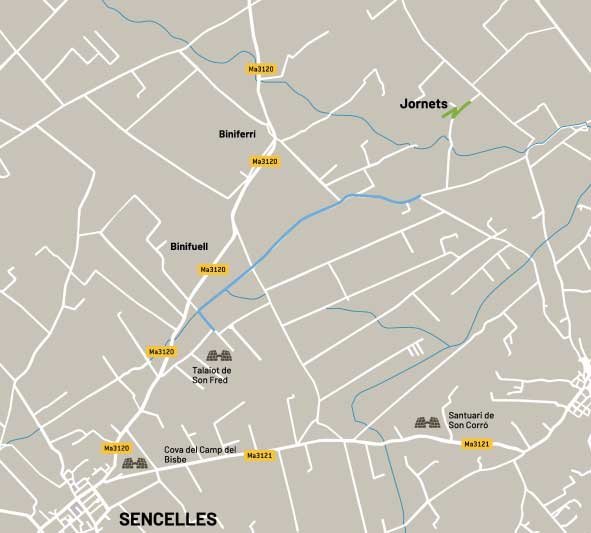
Jornets is without doubt one of the most delightful hamlets on the island. It is an ensemble built to a human scale, shaped by the dictates of history — turned into an estate, an oratory, a painted roof tile... To discover Jornets is to understand the virtue of austerity and, above all, the overwhelming beauty of simplicity, of that which endures through the rhythm of everyday life. Few places preserve the essence of that old Mallorca as this one does. A short but intense route right in the middle of the Mallorcan plain.
Punts d'interès de la ruta
1
Oratory of Saint Joseph
2
Can Nadal (painted roof tiles)
3
Jornets Estate
Oratory of Saint Joseph
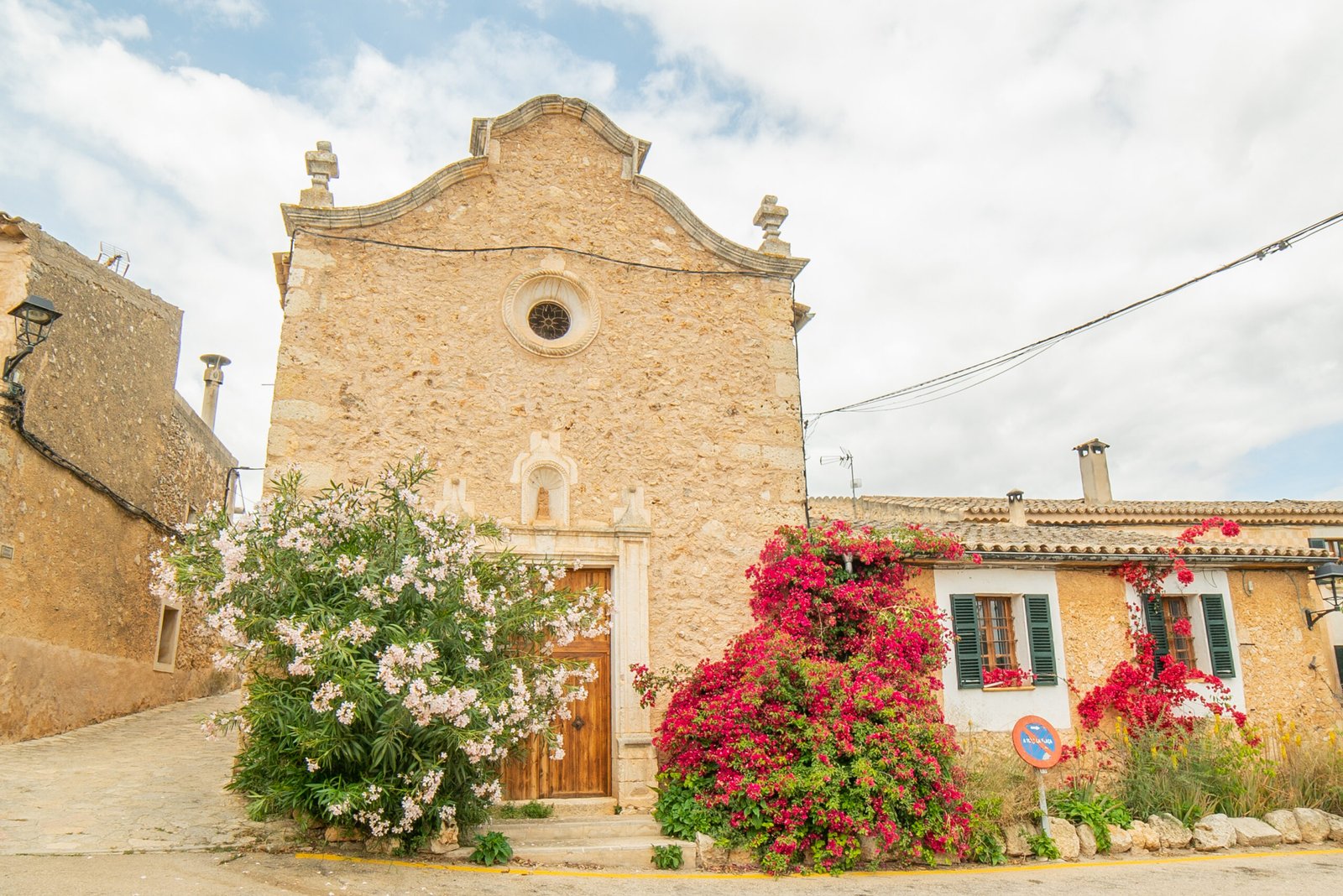
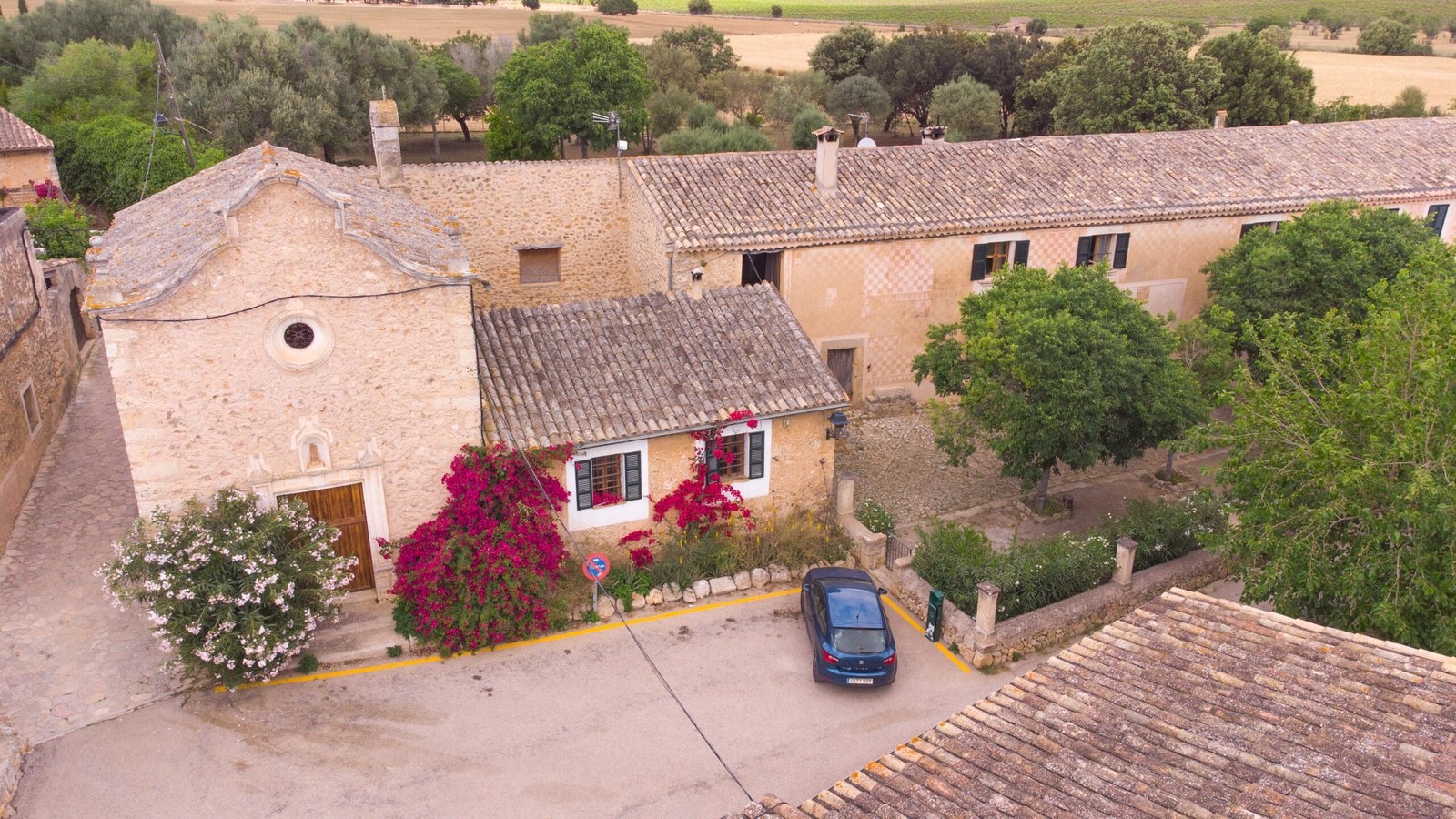
This distinctive oratory began construction at the end of the 18th century and was blessed in 1799. It was originally the private oratory of the Jornets estate, but as the hamlet grew and became established it became semi-public. It is a rectangular building with a façade in a simple Baroque style. The doorway has a lintel, crowned by a niche; above the oculus is a curved, mixed-line pediment, topped with decorative urns. At the rear stands a bell-gable. The interior has a barrel vault, with a main altarpiece dedicated to the patron saint, surrounded by other images.
Can Nadal (painted roof tiles)
The Can Nadal houses are an example of vernacular housing, comprising two storeys with unrendered stonework. On the right-hand corner stand the doorway, with a flattened arch, and the cart entrance, both whitewashed openings. To the left of the doorway is a stone bench with a mounting block. On the first floor there is a window with a sill, as well as a small window. However, what stands out most in this ensemble are the painted roof tiles preserved on the eaves. Teulografia, the art of painting roof tiles, is a very old practice, already documented in Islamic-era Mallorca. It reached its peak between the 17th and 18th centuries and was generally done with red ochre. It formed part of the rituals surrounding the building or renovation of a house. The motifs depicted are geometric, plant-based, religious symbols, dates, and so on. In the case of Can Nadal, one can see the monograms of Jesus and Mary, as well as some floral details.
Jornets Estate
The estate that gives its name to the hamlet has quite an ancient origin: the lineage is documented in the area in the 14th century; a century later the Rafal dels Jornets is recorded, and by 1578 it was divided into four properties. The family holding the main part were the Llebrés, surnamed "de Jornets". In the 18th century an increase in vine cultivation is documented, a time when the wine cellar was also built. During the 19th century, the Llebrés de Jornets married into the Planas family. The houses, opening onto a wide lane, have two storeys, with a main doorway topped by the coat of arms of the Llebrés de Jornets and the date 1826. The house has a second doorway, this one with an ogee-arched lintel. On the right-hand side there is a sundial as well as a porch, beneath which lies a third doorway bearing the date 1764. The stonework features a fine and quite singular chequered sgraffito.
Galeria d'imatges