
Humans and Nature
Naturalist routes

Durada
2 hours

On comença
Sencelles Square or Biniali Square

Distància
10.6 km

Unitat didàctica

GPX
Humans and Nature
If we look at the municipality's landscape from a certain height, we will see that the panorama is not continuous but is broken up as if it were a mosaic. Humans, who for years lived off the resources nature offered them, have shaped the landscape, creating a pattern that alternates natural, agricultural and also urban landscapes.
When they arrived in the Balearic Islands, the first humans found a landscape very different from the one we know today. And it is precisely their arrival that caused the transformation of the landscape, whether by clearing land to grow food or by overexploiting resources through logging or hunting.
On this route, through the interpretation of the landscape, we will see how, over the centuries, the inhabitants of these lands have survived on what nature offered them: the land, the water, the wind, the sun and living beings.
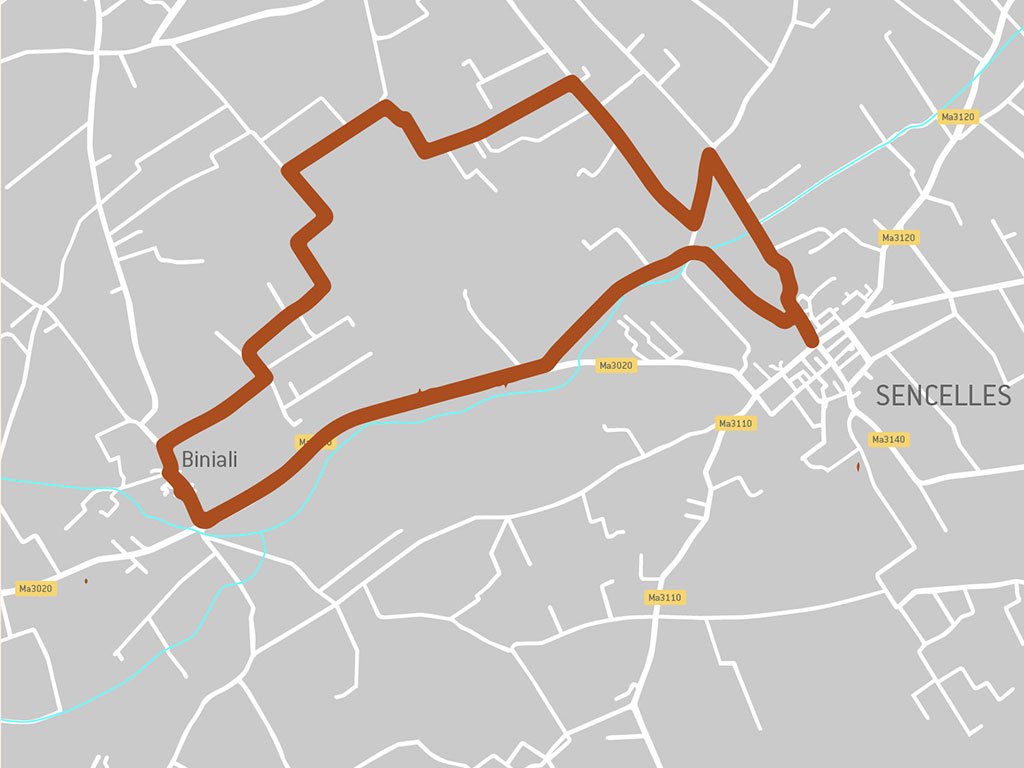
Punts d'interès de la ruta
1
Livestock Farming
2
Wild Plants
3
Hunting
4
The Wind
5
Agriculture
6
Viticulture
7
Water
Livestock Farming
As we leave the town centre of Sencelles, we soon find ourselves walking among forage fields and flocks of sheep, for this has been, and still is, a town with a strong livestock tradition. Since ancient times, the people of Sencelles have raised and traded livestock, mainly sheep, but also pigs, cattle and poultry. Sheep are raised mainly for their meat, but secondary products are also obtained, such as wool, hide, milk and dairy products. As for cattle, oxen and cows, they too are raised for meat and milk, but we must not forget that in the past these animals played an important role in farm work. Pigs have also played an important role in rural traditions, as it was rare for a family not to fatten a pig each year for the traditional pig slaughter (matances). And among the poultry, hens, ducks and turkeys have been raised for their meat and eggs.
Wild Plants
Humans have often gathered wild plants and fruits, such as blackberries from the bramble (Rubus ulmifolius), asparagus from wild asparagus (Asparagus acutifolius), or capers from the caper bush (Capparis spinosa). Also the leaves of chicory (Cichorium intybus) or wild beet (Beta vulgaris). Traditional liqueurs, such as the Mallorcan herb liqueur (herbes), have even been made with wild plants like fennel (Foeniculum vulgare) or rosemary (Rosmarinus officinalis).
During autumn, we can also make use of forest fruits, such as mushrooms. The most prized are saffron milk caps (Lactarius chrysorrheus), found in pine forests, but also the blue-grey russula (Russula grisea) or chanterelles (Cantharellus cibarius) in holm oak woods.
Hunting
Hunting is a very old activity that has evolved over time. In its beginnings, humans went out hunting to obtain food or to trade eggs, feathers or hides. Nowadays, hunting is a regulated sporting activity, aimed at maintaining the balance of ecosystems.
The most important huntable species here are rabbit, partridge and thrush, but also hares, quail, woodcock and wood pigeons. Among the farmland and scrubland, we can easily come across the rabbit (Oryctolagus cuniculus) and the hare (Lepus granatensis), distinguishable from each other by the hare's large ears, tipped with a black patch, while the rabbit's are smaller, rounded and unmarked. The red-legged partridge (Alectoris rufa) is a sedentary bird that nests on the ground, and we can easily spot it in late spring walking with its chicks among vineyards and crops. The song thrush (Turdus philomelos), on the other hand, is a migratory bird that visits us during autumn and winter. All these species are valued in our cuisine and feature in traditional dishes such as arròs brut or rabbit with onion. Another animal highly prized in our gastronomy is the snail, which, although not part of hunting activity as such, is a wild animal that can be gathered on rainy days by snail collectors.
The Wind
Majestic towers watch over the tramontana winds, recalling a time when wind power once drove their machinery. Thanks to clean, renewable energy, flour mills allowed flour, a staple food of the local diet, to be made from cereals grown on the municipality's land. The wind was also harnessed to draw water from wells and irrigate crops, using water-pumping windmills.
Today, in an age when the overexploitation of resources and globalisation are the order of the day, it would be worth looking back to learn from a way of subsisting and using nature based on proximity, sustainability and self-sufficiency.
Agriculture
Agriculture could be considered the art of cultivating the land. In times past, the economy of the town of Sencelles was based on this art, mainly through the cultivation of vines, but also cereals, almonds and figs.
Fig trees (Ficus carica) were grown to harvest their fruit, the fig, which could be eaten dried or fresh, traded, or given to pigs to fatten them before the traditional slaughter. This is why we find large fig groves around the municipality; however, you will hardly ever find a fig tree in flower, since its flower is hidden inside the fig itself. What we can enjoy, however, is the blossoming of the almond trees (Prunus dulcis), one of the other main crops of our municipality. This tree flowers before its leaves emerge, painting our winter landscapes with white and pink blossoms. It is grown for its fruit, the almond, which is made up of different parts: the hull, called the mesocarp, and the shell (endocarp), which contains the seed inside, the edible part. Cereal fields are also part of our landscape: wheat (Triticum spp.), oats (Avena sativa), barley (Hordeum vulgare) and rye (Secale cereale) are grown today mainly to feed livestock.
Viticulture
In a town with a wine-making tradition like Sencelles, it is no surprise to find ourselves walking among vineyards, with views of the Serra de Tramuntana as a backdrop.
The grapevine (Vitis vinifera) is a deciduous climbing plant that can reach 25 m in height, but we usually see it grown as a shrub, since it is pruned every year to make harvesting its fruit, the grape, easier. Grapes are berries, green or black depending on the variety, which allow us to make a drink deeply rooted in our culture: wine. The vine flowers between May and June, and during the summer the fruit ripens until, come September, the harvest — known as the vendimia (grape harvest) — begins.
Have you ever wondered why rose bushes are planted in vineyards? Well, the rose bush acts as an indicator of the presence of powdery mildew (Oidium tuckeri, now Erysiphe necator) should this fungus appear in the plantation. This fungus can cause serious diseases in the vine, but fortunately, given the choice, it prefers to infect the rose bush rather than the vine!
Water
Water is an indispensable resource for the survival of living beings on the planet. It is the source of life, an essential element without which humans could not survive, a basic element for the development of agriculture.
In our landscape, there are still remnants bearing witness to how humans extracted water from the aquifers of our municipality. Among the orchards and cultivated fields, we often come across water-wheels (norias) which, driven by animals, set in motion the gears that filled the scoops with water. Cisterns and ponds were used to store the water that would later give life to cereals, fruit trees and vegetables. In addition, in the houses, rainwater was collected in cisterns for human consumption.
Galeria d'imatges